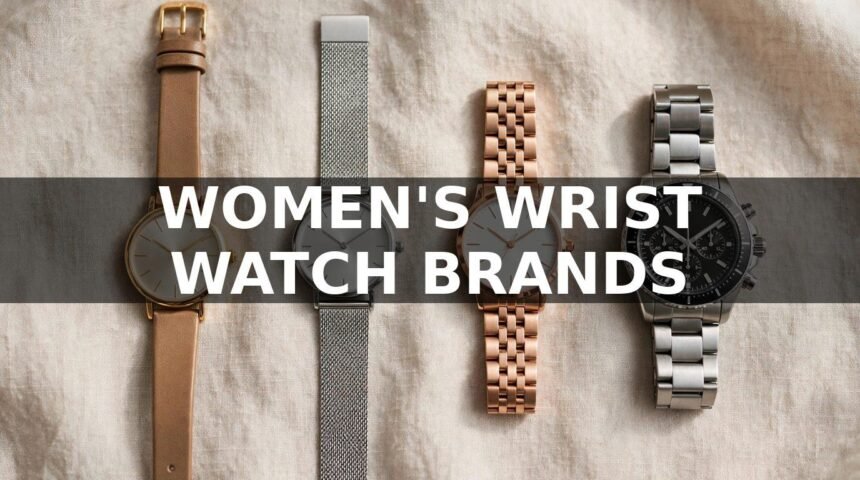
A good watch does more than tell the time. It finishes an outfit, marks a milestone, and quietly says something about the person wearing it. But with hundreds of women’s wrist watch brands on the market — from hundred-dollar fashion labels to five-figure Swiss houses — choosing one can feel harder than it should.
The good news is that you don’t need to spend a fortune to get a watch you’ll love for years. You need to know what separates a genuinely good watch from a pretty one, which brands deliver real quality at each price, and how to match a watch to your wrist, your wardrobe, and your daily life.
This guide covers all of it. We’ll look at the best women’s wrist watch brands across luxury, mid-range, affordable, and fashion tiers, explain how to judge quality before you buy, and finish with practical care tips and answers to the questions shoppers ask most.
How to Choose a Women’s Watch
Before you fall for a dial colour or a brand name, work through a few practical decisions. They narrow the field fast and save you from buying a watch that looks great in the shop and never leaves the drawer.
Start with how you’ll wear it
An everyday watch gets knocked around. It needs decent water resistance, a scratch-resistant crystal, and a strap that handles sweat, rain, and desk edges. A dress watch has an easier life, so you can prioritise a slim case and a beautiful dial over toughness. If you swim or work out in your watch, look for at least 100 metres of water resistance and a bracelet or rubber strap rather than leather.
Get the size right
Most women’s watches have cases between 28 and 36mm, and the sweet spot for most wrists is 30 to 34mm. A case that covers your whole wrist looks oversized; one that disappears looks lost. If your wrist is slim, try 28 to 32mm. If you like a bolder look, 34 to 36mm works well, and many brands now make their popular models in both sizes. Don’t guess — measure your wrist with a tape and try watches on in person when you can.
Understand the movement
The movement is the engine inside the watch, and there are three main types:
- Quartz: Battery-powered, very accurate, and low maintenance. A battery change every few years is all it needs. Most affordable and fashion watches use quartz.
- Automatic: Powered by the movement of your wrist, no battery required. Automatics need servicing every few years and are a little less accurate, but watch lovers value the craftsmanship.
- Solar: Light-powered quartz, like Citizen’s Eco-Drive. The battery recharges from any light source and can run for months in the dark. It’s a practical middle ground.
For a first quality watch, quartz or solar is the sensible choice. Choose automatic when you enjoy the idea of a mechanical watch and are happy to have it serviced.
Check the crystal and the strap
Sapphire crystal is the gold standard — it resists scratches far better than mineral glass, which is what most budget watches use. A sapphire crystal is one of the clearest signs a brand is serious about quality. For straps, steel bracelets last longest, leather looks classic but wears with water and sweat, and rubber or silicone suits active wear. Many brands now offer quick-release straps, so you can swap the look in seconds.
Set an honest budget
Decide your budget before you start browsing, and remember the watch is only part of the cost. An automatic watch needs a service every four to six years, and a leather strap may need replacing every couple of years. A watch you can afford to maintain is a better buy than one that stretches you thin.
Best Luxury Women’s Watch Brands
Luxury watches are about heritage, finishing, and the kind of craftsmanship that lasts decades. These brands hold their value better than any other tier, and several of their women’s models are genuine icons.
Rolex
Rolex is the most recognised watch brand in the world, and its women’s watches are as serious as its men’s. The Lady-Datejust is the classic pick — an elegant, robust everyday watch with a date window and a choice of dials, bracelets, and metals. The Oyster Perpetual is simpler and quieter, a clean steel watch that goes with everything. Rolex watches are famously well made, hold their value exceptionally well, and are serviced by one of the best networks in the industry. Expect luxury pricing: women’s Rolex models sit firmly in the high four-figure range and above.
Cartier
No brand blends jewellery and watchmaking quite like Cartier. The Tank, with its rectangular case and Roman numerals, has been an icon for over a century. The Panthère de Cartier, with its linked bracelet, wears like a piece of jewellery that happens to tell the time. Cartier watches are elegant rather than sporty, and they suit anyone who wants a watch that doubles as a statement piece. Prices for the most popular women’s models start in the mid four figures.
Omega
Omega pairs precision with beauty. The Constellation, with its distinctive half-moon claws and star emblem, is the brand’s best-known women’s collection, while the Seamaster Aqua Terra offers a sportier everyday option with excellent water resistance. Omega’s movements are known for accuracy, and the brand has a strong history in space exploration and Olympic timing — which is part of the appeal. Women’s Omega models typically sit in the low-to-mid four figures.
Patek Philippe
Patek Philippe sits at the top of the watch world. Its women’s watches, like the Twenty~4 with its distinctive rectangular case and diamond-set bezel, are made in small numbers with extraordinary finishing. These are heirloom pieces, bought to be kept for life and passed on. Prices start well into five figures, and availability is limited — but for collectors, nothing else quite compares.
Longines
Longines is often the first step into Swiss luxury. The DolceVita, a slim rectangular watch inspired by a 1920s design, is the brand’s signature women’s model, while La Grande Classique offers a round, understated alternative. Longines watches are elegant, reliable, and priced in the low four figures — a genuine Swiss luxury watch without the five-figure leap.
| Brand | Best known women’s model | Typical price tier | Best for |
|---|---|---|---|
| Rolex | Lady-Datejust | Luxury | Everyday prestige, value retention |
| Cartier | Tank / Panthère | Luxury | Jewellery-like elegance |
| Omega | Constellation | Luxury | Precision with a sporty edge |
| Patek Philippe | Twenty~4 | High luxury | Heirloom collecting |
| Longines | DolceVita | Entry luxury | First Swiss luxury watch |
Best Mid-Range Women’s Watch Brands
Mid-range brands are where the smartest money goes. You get Swiss or Japanese movements, sapphire crystals, and solid build quality at a fraction of luxury prices. If you want one great watch rather than a drawer full of fashion pieces, start here.
Seiko
Seiko has been making watches since 1881, and its women’s range is one of the strongest in this tier. The Presage Cocktail Time, with its sunburst dial and automatic movement, is a favourite for good reason: it looks far more expensive than it is. Seiko also makes excellent quartz dress watches and reliable everyday models. You get in-house movements, honest quality, and prices that typically sit in the low hundreds — remarkable value for what’s inside the case.
Citizen
Citizen’s Eco-Drive technology is one of the most practical ideas in watchmaking: the watch charges from light and never needs a battery change. The brand’s dress watches are elegant and slim, with diamond-accented options that look far pricier than they are, and many models offer 100 metres of water resistance. Citizen sits in the affordable-to-mid-range bracket, and an Eco-Drive is a genuinely sensible buy if you want a watch you never have to think about.
Tissot
Tissot is Switzerland’s best-value brand. The PRX, originally a 1970s design relaunched in a 35mm size, brings an integrated bracelet, an 80-hour automatic movement, and a sapphire crystal at a mid-range price. Tissot’s women’s dress watches are equally strong — slim, classic, and quietly elegant. If you want Swiss-made quality on a realistic budget, Tissot is hard to beat.
Hamilton
Hamilton brings American heritage and Swiss movements together. Its women’s watches lean classic and understated, with clean dials and well-finished cases. Hamilton is a favourite among people who know watches but don’t want to shout about it, and its prices sit comfortably in the mid-range.
Bulova
Bulova has been making watches since 1875 and has a long history of innovation, including the tuning-fork Accutron movement. Its women’s collection mixes classic dress watches with diamond-accented designs, many with automatic movements and sapphire crystals. Bulova offers a lot of watch for the money and is a strong choice if you want something a little different from the usual names.
Best Affordable Women’s Watch Brands
Affordable doesn’t have to mean disposable. These brands make watches that look good, keep good time, and last — as long as you choose the right model and skip the purely decorative ones.
Casio
Casio is the king of affordable watches. The vintage A168, a slim digital watch in gold or silver tones, costs very little and has become a genuine style icon. The Baby-G line is tough, colourful, and water resistant — a great pick for younger wearers or anyone who wants a watch they can wear anywhere without worrying. Casio watches are famously reliable, and their batteries last for years.
Timex
Timex has been around since 1854 and still makes some of the best everyday watches under a hundred dollars. The Weekender is a simple, charming watch with a fabric strap, while the brand’s Indiglo night light is genuinely useful. Timex watches are honest, durable, and easy to wear — a safe first watch or a no-fuss daily beater.
Orient
Orient is Seiko’s sister company and a quiet favourite among watch enthusiasts. Its women’s automatic watches offer real mechanical movements at prices that seem too low for what’s inside. The Bambino line, with its small-seconds subdial and classic styling, is a standout. If you want an automatic watch on a tight budget, Orient is the brand to look at first.
Daniel Wellington
Daniel Wellington built its name on minimalist design: clean white dials, slim cases, and interchangeable leather or mesh straps. These are quartz fashion watches, and they’re best bought for the look rather than the movement. They’re light, comfortable, and easy to dress up or down — just know that you’re paying mostly for design, not horology.
MVMT
MVMT follows a similar formula to Daniel Wellington — minimalist, modern, and affordable — with a slightly broader range that includes chronographs and bolder dials. Like other brands in this tier, MVMT watches are style-first, so choose them for the design and the price, and expect quartz accuracy and straightforward reliability.
| Brand | Typical price tier | Movement | Best for |
|---|---|---|---|
| Casio | Budget | Quartz / digital | Everyday toughness, retro style |
| Timex | Budget | Quartz | Simple, reliable daily wear |
| Orient | Budget to mid-range | Automatic | Affordable mechanical watches |
| Daniel Wellington | Affordable | Quartz | Minimalist fashion looks |
| MVMT | Affordable | Quartz | Modern, clean design |
Best Fashion Watch Brands
Fashion brands design watches to match their clothing collections. They prioritise looks over movements, which is fine — as long as you buy them for the design and understand what you’re getting.
Michael Kors
Michael Kors is the best-known fashion watch brand for women, and its designs are unapologetically glamorous: rose gold, crystal pavé dials, oversized cases, and chronograph styling. The Parker and Slim Runway collections are the most popular. These watches make a statement, and they’re widely available — just remember the movement inside is a standard quartz, so you’re paying for the brand and the design.
Fossil
Fossil sits between fashion and function. Its women’s watches range from classic leather-strap models like the Riley to rectangular designs like the Raquel, and the brand also makes smartwatches. Fossil watches are well made for the price, widely available, and easy to find on sale — a solid choice if you want a stylish everyday watch without spending much.
Coach
Coach watches carry the brand’s clean New York aesthetic: simple dials, quality leather straps, and subtle branding. They’re more understated than Michael Kors, which makes them easier to wear every day. Like other fashion brands, they use quartz movements, and the value is in the design and the name.
Kate Spade
Kate Spade watches are playful and feminine, with scalloped details, pastel colours, and whimsical touches. They’re best suited as a fun second watch rather than your only timepiece, but they’re well made and cheerful — a good gift choice.
A word of caution: fashion watches rarely hold value, and the cheapest ones use mineral glass and generic movements that won’t last. If you love a fashion design, buy from an established brand like the ones above rather than an unknown label, and expect the watch to be a style accessory rather than an investment.
Smartwatches vs Traditional Watches
The biggest question many buyers face today is whether to buy a smartwatch or a traditional one. The honest answer is that they do different jobs, and many women end up owning both.
A smartwatch — most commonly an Apple Watch or a Samsung Galaxy Watch — tracks fitness, shows notifications, and handles calls and messages from your wrist. It’s practical, and modern models look far better than the first generations. But it needs charging every day or two, becomes outdated within a few years, and rarely feels like jewellery.
A traditional watch needs almost no maintenance, never needs charging, and can last decades. It doesn’t track your steps, but it also never buzzes during dinner. For formal occasions, for marking a milestone, or for anyone who likes the idea of a watch that outlasts trends, traditional wins.
If you can only buy one, think about what you actually need. If fitness tracking and notifications matter daily, a smartwatch earns its place. If you want something beautiful, lasting, and low-maintenance, a traditional watch is the better buy. Plenty of women wear a smartwatch during the day and a traditional watch in the evening — there’s no rule that says you must choose.
How to Spot a Quality Watch
Whether you’re spending fifty dollars or five thousand, the same checks apply. Use them before you buy, and you’ll avoid most disappointments.
Look at the crystal. Sapphire resists scratches; mineral glass doesn’t. Hold the watch under a light and check for reflections — a sapphire crystal usually has an anti-reflective coating. If a brand doesn’t say what crystal it uses, assume it’s mineral glass.
Feel the weight. A well-made steel watch has a reassuring heft. A watch that feels suspiciously light for its size often uses cheaper materials or a hollow bracelet. That said, very light can also mean titanium or a deliberately slim design — weight is a clue, not a rule.
Check the finishing. Look closely at the dial: are the markers evenly spaced and cleanly applied? Does the second hand move smoothly (automatic) or tick once per second (quartz)? Are the crown and pushers firm, with no wobble? Sloppy finishing on the outside usually means corners were cut inside too.
Ask about water resistance. A watch rated 30 metres is splash-proof, not swim-proof. For swimming you want 100 metres, and for regular water use, a screw-down crown helps. Don’t trust a watch’s water rating if the seller can’t explain it.
Buy from an authorised seller. Counterfeits are a real problem, especially with luxury brands. Buy from the brand’s own store, an authorised dealer, or a reputable retailer, and keep the warranty card and receipt. If a deal looks too good to be true, it almost certainly is.
Check the warranty. Most good brands offer at least two years; several offer five. A strong warranty is a sign the brand trusts its own product.
Watch Care Tips
A good watch lasts decades with a little care. Most of the rules are simple, and the biggest mistakes are the easy ones to avoid.
- Keep it away from magnets. Phones, laptop speakers, and magnetic bag clasps can affect a mechanical watch’s accuracy. Quartz watches are less affected, but it’s still worth keeping some distance.
- Don’t shower in a leather-strap watch. Water, soap, and steam damage leather quickly. Save leather for dry days, and use steel or rubber for wet ones.
- Service automatics regularly. An automatic movement needs a service every four to six years — a clean, oil, and regulation by a qualified watchmaker. Skipping services shortens the watch’s life.
- Change quartz batteries promptly. A dead battery left inside can leak and damage the movement. Have it changed as soon as the watch stops.
- Store it properly. Keep watches in a box or pouch, away from direct sunlight and humidity. If you rotate watches, a watch winder keeps automatics running — though it’s optional rather than essential.
- Clean it gently. Wipe the case and bracelet with a soft, dry cloth. For steel bracelets, warm water and mild soap work well; dry thoroughly afterwards. Never use harsh chemicals or ultrasonic cleaners on a watch you care about.
Frequently Asked Questions
What is the best women’s watch brand overall?
There is no single best brand — it depends on your budget and what you want from the watch. Rolex and Cartier lead at the luxury end, Seiko and Tissot offer the best value in the mid-range, and Casio and Timex are the most reliable affordable choices. The best brand for you is the one that fits your wrist, your style, and your budget.
How much should I spend on a women’s watch?
Spend what you’re comfortable with, but as a guide: a good everyday watch starts around $50 to $100 from brands like Casio or Timex. A quality mid-range watch with a sapphire crystal and a good movement costs roughly $200 to $1,000. Swiss luxury starts around $1,000 to $2,000 and goes up from there. The most important thing is buying the best watch you can comfortably afford, not stretching for a name.
Are women’s watches smaller than men’s watches?
Usually, yes. Women’s watches typically have cases between 28 and 36mm, while men’s watches are usually 38 to 44mm. But the lines are blurring — many women now wear 36 to 38mm watches, and plenty of brands make unisex models. The right size is the one that looks balanced on your wrist, whatever the label says.
Is it worth buying an automatic watch?
It depends on how you feel about mechanical watches. Automatics need servicing every few years and are less accurate than quartz, but many people love the craftsmanship and the idea of a watch powered by movement. If you want a watch you never have to think about, quartz or solar is the better choice. If you enjoy the romance of mechanical watchmaking, an automatic is worth it.
Do fashion watches last?
Fashion watches from established brands like Michael Kors, Fossil, and Coach generally last several years with normal wear. They use quartz movements that are reliable, though the finishing and materials are not as durable as mid-range or luxury watches. Treat a fashion watch as a style accessory with a realistic lifespan, and it won’t disappoint you.
Can I wear a watch every day?
Yes — most quality watches are made for daily wear. The key is matching the watch to your day: a steel bracelet or rubber strap handles daily life better than leather, and 100 metres of water resistance gives you peace of mind. Rotate your watches if you own more than one, and give leather straps a rest on wet days.
Conclusion
The best women’s wrist watch brands aren’t the most expensive ones — they’re the ones that match how you live. A Casio you wear every day beats a Cartier that stays in a drawer. A Seiko with a sapphire crystal and an automatic movement beats a fashion watch that costs twice as much.
Start with your budget and your lifestyle, then choose within that tier. Check the crystal, the movement, and the strap. Buy from a seller you trust. And when you find the watch that feels right on your wrist — the one you reach for without thinking — you’ve found the right brand, whatever the name on the dial says.