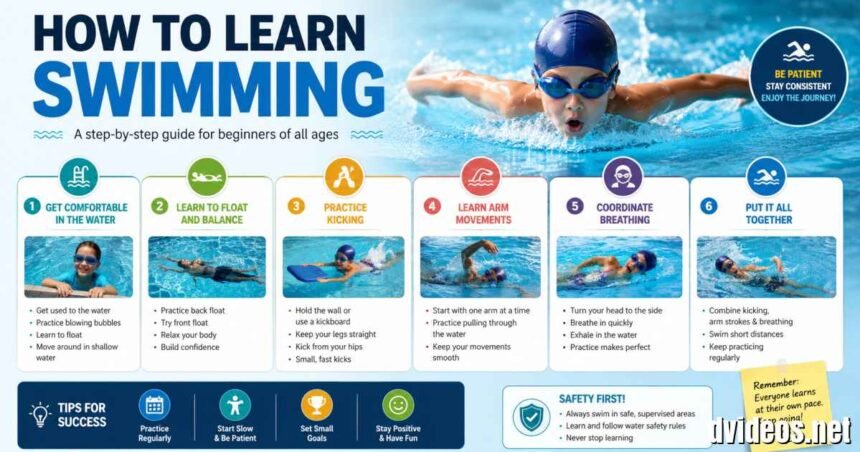
Learning how to swim is one of the most valuable skills you can develop. Swimming is not only an enjoyable recreational activity but also a life-saving skill that improves your overall health, fitness, and confidence. Whether you’re a child, teenager, adult, or senior, it’s never too late to start.
In 2026, learning swimming has become easier than ever thanks to modern training techniques, beginner-friendly swimming programs, affordable swimming equipment, and experienced instructors. Even if you’re afraid of water, you can gradually overcome your fear and learn to swim safely with the right approach.
This complete beginner’s guide covers everything you need to know—from preparing for your first lesson to mastering swimming strokes, improving breathing, following a 30-day training plan, and avoiding common beginner mistakes.
Why Learning Swimming Is Important in 2026
Swimming is much more than a sport. It is a how to learn swimming, an essential survival skill, and one of the healthiest physical activities recommended by fitness experts worldwide.
Benefits of Learning Swimming
1. Full-Body Workout
Swimming engages nearly every major muscle group, including your:
- Arms
- Shoulders
- Chest
- Back
- Core
- Legs
Unlike many exercises, swimming places very little stress on your joints, making it ideal for people of all ages.
2. Helps With Weight Loss
Swimming burns a significant number of calories.
- Light swimming: 200–300 calories/hour
- Moderate swimming: 400–600 calories/hour
- Vigorous swimming: 700+ calories/hour
A 30-minute swimming session can burn approximately 300–400 calories, depending on your intensity and body weight.
3. Improves Heart and Lung Health
Swimming strengthens your cardiovascular system while improving lung capacity through controlled breathing techniques.
4. Reduces Stress and Anxiety
Water naturally has a calming effect. Swimming helps reduce:
- Stress
- Anxiety
- Depression
- Mental fatigue
Many people also report better sleep after regular swimming sessions.
5. Builds Confidence
Learning how to move comfortably in water boosts self-confidence and helps overcome fear.
6. Increases Safety
Perhaps the biggest benefit is that swimming can save lives. Knowing how to swim greatly reduces the risk of drowning and helps you stay safe during water activities.
Prepare Yourself Before Entering the Pool
Preparation is essential for every beginner. Starting with the right equipment and mindset makes learning much easier.
Essential Swimming Equipment
Before your first lesson, gather these items:
- Comfortable swimsuit
- Swimming goggles
- Swim cap
- Kickboard
- Pool noodle
- Swimming towel
- Water bottle
- Flip-flops or pool sandals
These accessories help beginners practice safely while improving comfort.
Choose the Right Pool
Your first swimming lessons should take place in:
- A clean swimming pool
- Shallow water
- A facility with a certified lifeguard
- A pool offering beginner swimming classes
Avoid learning in rivers, lakes, or the ocean until you become an experienced swimmer.
Warm Up Before Swimming
Always spend 5–10 minutes warming up before entering the water.
Good warm-up exercises include:
- Shoulder rolls
- Neck rotations
- Arm circles
- Leg swings
- Light stretching
This reduces injury risk and prepares your muscles.
Build Water Confidence
If you’re nervous around water:
- Sit on the pool edge.
- Splash water on your face.
- Walk around in shallow water.
- Hold the pool wall.
- Practice relaxing before attempting to swim.
Remember, confidence develops gradually.
Learn Floating and Understand Buoyancy
One of the biggest challenges for beginners is learning to trust the water.
The first real swimming skill is floating.
Your lungs naturally help your body float when filled with air.
Back Floating
Back floating is usually the easiest floating technique.
Steps
- Hold the pool wall.
- Take a deep breath.
- Slowly lean backward.
- Keep your ears underwater.
- Look straight toward the ceiling.
- Relax your body.
- Stretch your arms and legs slightly.
Practice until you can float comfortably for 30 seconds.
Front Floating
Front floating teaches body balance.
Steps
- Take a deep breath.
- Push gently away from the wall.
- Keep your face underwater.
- Extend your arms.
- Stay relaxed.
- Stand up after 5–10 seconds.
Floating is the foundation of every swimming stroke.
Master Proper Swimming Breathing Technique
Many beginners struggle because they hold their breath incorrectly.
The correct breathing technique makes swimming much easier and prevents panic.
The Golden Rule
- Inhale through your mouth above the water.
- Exhale slowly through your nose and mouth underwater.
Bubble Breathing Drill
Practice this simple exercise:
- Hold the pool edge.
- Take a deep breath.
- Put your face underwater.
- Blow bubbles slowly.
- Turn your head sideways.
- Breathe in.
- Repeat.
Practice for 5–10 minutes every session.
Avoid This Common Mistake
Never lift your entire head to breathe.
Instead:
- Rotate your head slightly.
- Keep one ear in the water.
- Continue swimming smoothly.
For freestyle swimming, breathe every 2–3 arm strokes.
Good breathing improves:
- Endurance
- Relaxation
- Swimming speed
- Body position
Learn the Four Basic Swimming Strokes
After floating and breathing become comfortable, it’s time to learn swimming strokes.
1. Freestyle (Front Crawl)
Freestyle is the fastest and most popular swimming stroke.
Tips
- Keep your body horizontal.
- Kick from your hips.
- Alternate arm movements.
- Rotate your body naturally.
- Breathe to the side.
Freestyle is usually the first stroke beginners learn.
2. Breaststroke
Breaststroke is slower but very energy-efficient.
Technique
- Arms move together.
- Legs perform a frog kick.
- Glide between strokes.
- Lift your head naturally for breathing.
Many beginners find breaststroke easier for longer swims.
3. Backstroke
Backstroke is excellent for beginners who don’t like putting their face underwater.
Tips
- Float on your back.
- Keep hips high.
- Alternate arm movements.
- Kick continuously.
- Look straight upward.
4. Butterfly Stroke
Butterfly is the most advanced stroke.
It requires:
- Strong shoulders
- Powerful core muscles
- Excellent timing
- Good breathing control
Beginners should master the first three strokes before attempting butterfly.
Essential Water Safety Rules Every Beginner Must Know
Swimming safely is just as important as learning techniques.
Always follow these rules.
Never Swim Alone
Always swim:
- With a friend
- Under instructor supervision
- Where a lifeguard is present
Stay in Shallow Water
Remain in shallow water until you can comfortably swim 25 meters continuously.
Learn Treading Water
Treading water allows you to stay afloat without swimming forward.
Practice:
- Small arm circles
- Gentle frog kicks
Aim to tread water for at least one minute.
Don’t Panic
If water enters your nose:
- Stay calm.
- Roll onto your back.
- Float.
- Stand if possible.
Panic is more dangerous than the water itself.
Never Dive Into Shallow Water
Always enter using:
- Pool steps
- Ladder
- Safe entry point
Improper diving can cause serious injury.
Learn Basic Water Rescue Skills
Enrolling in a certified swimming class often includes:
- Basic rescue techniques
- CPR awareness
- Emergency response skills
These skills could save a life.
30-Day Beginner Swimming Training Plan
Following a structured plan helps you improve consistently.
Week 1 – Water Confidence
Focus on:
- Walking in shallow water
- Bubble breathing
- Back floating
- Front floating
Goal:
Float comfortably for 30 seconds.
Week 2 – Kicking and Gliding
Practice:
- Flutter kick with kickboard
- Push off the wall
- Body gliding
Goal:
Improve body balance.
Week 3 – Learn Basic Strokes
Focus on:
- Freestyle arms
- Side breathing
- Breaststroke kick
- Coordinating movements
Goal:
Swim 10–15 meters independently.
Week 4 – Build Endurance
Practice:
- Swimming continuously
- Treading water
- Combining strokes
- Improving breathing rhythm
Goal:
Swim 25 meters without stopping.
Weekly Practice Schedule
For best results:
- 4–5 sessions per week
- 45–60 minutes each session
Consistency always beats intensity.
Common Swimming Mistakes Beginners Should Avoid
Many new swimmers slow their progress by making simple mistakes.
Avoid these common errors:
Holding Too Much Tension
Relax your muscles.
A relaxed body naturally floats better.
Kicking From the Knees
Always kick from your hips, not your knees.
Looking Forward
Keep your head in a neutral position.
Looking forward causes your hips to sink.
Holding Your Breath
Maintain steady rhythmic breathing throughout every stroke.
Skipping Goggles
Swimming goggles improve:
- Vision
- Comfort
- Confidence
- Body alignment
Learning Too Many Strokes at Once
Master:
- Floating
- Breathing
- Kicking
- Freestyle
Then move to other strokes.
Ignoring Feedback
Ask a swimming coach to evaluate your technique or record yourself swimming to identify areas for improvement.
Frequently Asked Questions About Learning Swimming
How long does it take to learn swimming?
Most beginners can learn the basics in 2–4 weeks with regular practice. Becoming a confident swimmer usually takes 2–3 months, depending on consistency.
Can adults learn swimming?
Absolutely. Adults of any age can learn to swim with proper instruction and regular practice.
Is swimming safe for beginners?
Yes, provided you practice in a supervised pool, follow water safety rules, and avoid swimming alone.
Which swimming stroke is easiest for beginners?
Freestyle and breaststroke are generally the easiest strokes for beginners to learn.
How often should I practice?
Aim for 4–5 sessions per week, each lasting 45–60 minutes, for the fastest progress.
Final Words
Learning how to learn swimming is easier than ever thanks to improved coaching methods, modern swimming equipment, and beginner-friendly training programs. You don’t need to be naturally athletic—you simply need patience, consistency, and proper guidance.
Start by becoming comfortable in the water, then focus on floating, breathing, kicking, and mastering basic strokes one step at a time. Follow a structured practice schedule, prioritize water safety, and don’t rush the learning process. Every confident swimmer once started as a beginner holding onto the pool wall.
If you stay consistent and practice 4–5 times a week, you can build enough confidence to swim independently within a month. Swimming is more than a sport—it’s a lifelong skill that improves your health, enhances your fitness, and could one day save your life.
So take the first step today, join a beginner-friendly swimming program, and begin your journey toward becoming a confident swimmer in 2026.