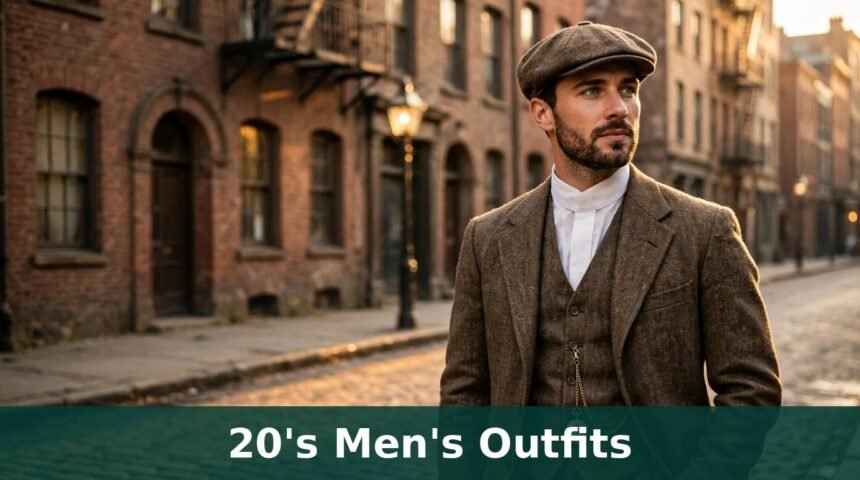
Few decades in fashion have left as lasting a mark as the 1920s. The clothes men wore in that era were sharp, confident, and surprisingly practical, and that is exactly why 20’s men’s outfits keep coming back. From the three-piece suit to the flat cap, from knitted waistcoats to two-tone shoes, the decade gave menswear a set of building blocks that still work today. You do not need a costume or a fancy-dress party to wear them. With the right fit and a few modern touches, these looks feel fresh, not dated.
The appeal is easy to understand. Twenties style was built around clean lines and good tailoring. Jackets sat close to the body without feeling tight. Trousers were high-waisted and straight. Shirts were simple, collars were neat, and accessories did the talking. A pocket square, a tie bar, or a well-chosen hat could change the whole mood of an outfit. That balance — structure on top, personality in the details — is what makes the style so wearable a hundred years later.
In this guide, we will walk through the key pieces, the fabrics and colours that defined the decade, and how to put 20’s men’s outfits together for real life: work, weddings, evenings out, and weekends. You will find outfit ideas, fit advice, and common mistakes to avoid, so you can borrow from the past without looking like you stepped out of a museum.
More Information: What Is a Blood Moon? Meaning, Causes and How to See One
What Defines 20’s Men’s Outfits?
The 1920s marked a turning point in how men dressed. After the First World War, fashion loosened up. The stiff, formal clothing of the Edwardian era gave way to something more relaxed, though it stayed smart. Men wanted clothes they could move in, work in, and dance in. The result was a style that mixed tradition with a new sense of ease.
One of the biggest changes was the suit itself. The three-piece suit became the standard for a well-dressed man. It usually came in wool, in navy, charcoal, or brown, and it was worn with a waistcoat that matched the jacket and trousers. The jacket had a natural shoulder and a single or double-breasted front. Lapels were wider than they are in many modern suits, and the overall shape was longer and leaner.
Trousers told their own story. They were cut high on the waist and worn with braces rather than a belt in many cases. The legs were straight and fairly wide, sometimes with a turn-up at the hem. Pleats at the front gave extra room and a clean drape. It was a comfortable cut, and it flattered most body shapes because it lengthened the leg.
Shirts were simpler than the suits they went under. White was the safe choice for formal occasions, while pale blue, cream, and soft stripes worked for everyday wear. Collars were detachable in the early part of the decade, though attached collars became more common as the years went on. Cufflinks added a small touch of polish, and they were often the one place a man showed a bit of personal taste.
Shoes finished the look. Oxford shoes in black or dark brown were the everyday choice. Two-tone spectator shoes — usually white and brown or black and cream — were the bolder option, popular for summer and for social events. They are one of the most recognisable pieces of twenties footwear, and they still turn heads today when worn well.
The Key Pieces of a 1920s Wardrobe
If you want to build 20’s men’s outfits from scratch, start with the core pieces. You do not need all of them at once. A few well-chosen items will take you a long way, and you can add the rest over time.
The Three-Piece Suit
This is the foundation. A three-piece suit in navy or charcoal wool is the most useful starting point. Look for a jacket with a natural shoulder, a waistcoat that buttons high, and trousers with a mid to high rise. The fit matters more than the label. The jacket should close without pulling, the waistcoat should sit flat, and the trousers should break just slightly over the shoe. If you buy off the peg, budget for a tailor. A small adjustment to the sleeve or trouser length can make an ordinary suit look made for you.
The Waistcoat
The waistcoat is what separates a twenties outfit from a standard modern suit. It adds warmth, structure, and a finished look even when the jacket comes off. In the 1920s, waistcoats were often single-breasted with five or six buttons, and the bottom button was left undone. That rule still holds. A contrasting waistcoat — grey with a navy suit, or a subtle pattern against a plain suit — can add interest without shouting.
The Shirt and Tie
A plain white or pale blue shirt is the safest partner for a twenties suit. The collar should sit neatly under the jacket, with just a small amount showing above the lapel. Ties in the 1920s were narrower than the wide ties of later decades, and they were often worn in solid colours, small patterns, or stripes. A knitted tie in a muted colour is a good modern choice that nods to the period without looking like a costume. Bow ties were also common, especially for evening wear, and a black bow tie with a dinner jacket remains a classic.
The Flat Cap and the Fedora
Headwear was part of everyday dress in the 1920s, and two hats defined the decade for men. The flat cap, in tweed or wool, was the working man’s choice and the country gentleman’s favourite. It works brilliantly today with a tweed jacket, a knit, and sturdy shoes. The fedora, with its pinched crown and wide brim, was the smarter option. A fedora in felt, in grey or brown, can lift a suit and coat combination in autumn and winter. Wear it straight, not tilted at a dramatic angle, and the effect stays classy rather than theatrical.
Knitwear and the Cardigan
Knitwear played a bigger role in the 1920s than many people realise. Fair Isle patterns, cricket jumpers with striped trims, and chunky cardigans were all part of the decade’s wardrobe. A V-neck jumper over a shirt and tie, under a tweed jacket, is one of the most comfortable and most authentic twenties-inspired outfits you can wear. It is also one of the easiest to put together from clothes you may already own.
The Overcoat
A long wool overcoat was the finishing layer in cold weather. It was usually single-breasted, knee-length or longer, in navy, charcoal, or camel. The shape was straight and clean, with a notched lapel and a single vent at the back. A good overcoat still does the same job today. It keeps a suit looking sharp outdoors, and it adds a sense of occasion to even a simple outfit underneath.
Fabrics, Colours and Patterns
The look of the 1920s was shaped as much by fabric as by cut. Wool was the workhorse. It held its shape, draped well, and came in weights for every season. Tweed was the country choice, with its rough texture and earthy flecks. Flannel was softer and warmer, popular for winter suits and trousers. Linen and cotton appeared in summer, in lighter colours and looser weaves.
Colour in the decade was richer than the black-and-white photographs suggest. Navy and charcoal were the staples for suits, but brown, grey, and olive were common too. Shirts brought in cream, pale blue, and soft pink. Ties and pocket squares added burgundy, mustard, forest green, and dusty blue. The trick was balance: a strong colour in one place, quieter tones everywhere else.
Patterns were used with confidence but rarely all at once. Pinstripes and chalk stripes gave suits a formal edge. Herringbone and houndstooth added texture to tweed jackets and coats. Checks were popular for casual jackets and caps. The rule that still works today is simple: one pattern at a time, or two patterns in very different scales. A striped tie with a plain shirt and a plain suit will always look better than three competing patterns fighting for attention.
How to Wear 20’s Men’s Outfits Today
The secret to wearing twenties style now is to take one or two period pieces and pair them with modern basics. A full head-to-toe 1920s outfit can look wonderful for a themed event, but for everyday life, a lighter touch works better.
Start with the suit. A modern three-piece suit in navy, worn with a plain white shirt and a slim tie, already carries a twenties feel. Add a pocket square in a soft colour and a pair of dark Oxford shoes, and you have a look that works for a wedding, a job interview, or a smart dinner. If the waistcoat feels too formal for the occasion, leave it off and wear the two-piece version instead.
For a smart-casual look, try a tweed jacket with a knitted waistcoat or a V-neck jumper, a shirt with the top button undone, and dark chinos or flannel trousers. A flat cap and leather boots finish the outfit. It is comfortable, warm, and full of character, and it suits a weekend lunch, a country walk, or a casual day at work.
For an evening out, a black or midnight-blue dinner jacket with a bow tie is the classic twenties choice. Keep the shirt white, the shoes polished, and the accessories minimal. A white pocket square and a simple watch are enough. The look is timeless because it relies on fit and fabric rather than fashion tricks.
For summer, linen is your friend. A light-coloured linen suit or a linen shirt with high-waisted trousers captures the relaxed side of the decade. Two-tone shoes or clean white trainers, depending on the occasion, keep the outfit grounded in the present. A straw boater hat is the period-correct summer choice, though a simple cap or no hat at all will feel more natural for most people today.
Fit is the part that makes or breaks the whole thing. Twenties clothing was tailored, not baggy and not skin-tight. Jackets should follow the shoulder line. Trousers should sit at the natural waist. Shirts should not billow. If something feels too loose or too tight, a tailor can usually fix it for less than the cost of a new garment. That one step is the difference between looking like you are wearing a costume and looking like you dress well.
20’s Men’s Outfits for Different Occasions
| Occasion | Core outfit | Key accessories |
|---|---|---|
| Wedding guest | Navy three-piece suit, white shirt, slim tie | Pocket square, Oxford shoes, simple watch |
| Job interview | Charcoal two-piece suit, pale blue shirt, dark tie | Polished shoes, leather belt, neat tie bar |
| Evening event | Black dinner jacket, white shirt, bow tie | Cufflinks, white pocket square, patent shoes |
| Smart-casual day | Tweed jacket, knit waistcoat, shirt, flannel trousers | Flat cap, leather boots, scarf in winter |
| Summer outing | Linen shirt, light trousers, relaxed blazer | Two-tone shoes or clean trainers, sunglasses |
| Themed party | Full three-piece suit, braces, spectator shoes | Fedora, pocket watch, patterned tie |
Use the table as a starting point, not a rulebook. The best outfits come from adjusting these ideas to your own taste, your body shape, and the weather on the day. A wedding in summer calls for lighter fabric than a wedding in winter, and a creative workplace will allow more pattern and colour than a formal office.
Grooming and Accessories: The Finishing Touches
In the 1920s, grooming was part of the outfit. Hair was usually short at the sides and back, with a side parting and a neat finish. A little pomade or wax kept it in place. Today, the same clean, side-parted style works well with a twenties outfit, but it is not compulsory. What matters is that the hair looks intentional rather than accidental.
Accessories deserve the same care. A pocket square should complement the tie, not match it exactly. A tie bar sits between the third and fourth shirt buttons and keeps the tie in place. Cufflinks should be simple — silver, gold, or mother-of-pearl — rather than novelty shapes. A leather watch strap in brown or black ties the whole outfit together.
Braces are worth a mention. In the 1920s, braces were the normal way to hold up trousers, and they are still a good choice with high-waisted trousers that have no belt loops. Choose plain braces in a dark colour, or a subtle pattern, and wear them under the waistcoat so they show only when the jacket comes off. A belt, by contrast, can break the clean line of a high-waisted trouser, so it is often better left out.
Socks and shoes complete the picture. Dark socks with a suit, in navy, charcoal, or burgundy, are the safe choice. Patterned socks in a restrained design can add a quiet touch of personality. Shoes should be clean and polished. It sounds obvious, but scuffed shoes can undo an otherwise perfect outfit in seconds.
More Information: Men’s Leather Jacket: Styles, Fit and How to Choose One
Common Mistakes to Avoid
The most common mistake is going too far. A full twenties outfit with a fedora, braces, a pocket watch, a bow tie, and spectator shoes can look fantastic at a themed event, but worn all at once to the office it can feel like a costume. Pick the pieces you love most and let the rest of the outfit stay modern and simple.
The second mistake is the wrong fit. A suit that is too big will swallow you, and one that is too small will pull and gape. Twenties style relied on tailoring, so fit is not a detail — it is the whole point. Try the jacket on with the waistcoat and shirt you plan to wear, and check the fit in a mirror from the front and the side.
The third mistake is mixing too many patterns. A checked jacket, a striped shirt, a patterned tie, and a patterned pocket square will compete with each other. Choose one pattern to lead, keep the rest plain, and let the colours do the work.
The fourth mistake is forgetting the season. A heavy tweed suit in high summer will be uncomfortable, and a linen suit in winter will look out of place. Match the fabric to the weather, and the outfit will look right without any extra effort.
Finally, do not buy everything at once. Start with one good suit and a few shirts and ties. Wear them, see what you reach for, and add pieces that fill the gaps. A wardrobe built slowly, piece by piece, will serve you better than a full set bought in a single afternoon.
Where to Find Twenties-Inspired Clothing
You do not need a specialist vintage shop to dress in this style, though vintage shops are a wonderful place to look. Many modern high-street and online retailers sell three-piece suits, tweed jackets, flat caps, and Oxford shoes that fit the look. The key is to search for the pieces, not the decade. Look for a “three-piece suit” rather than a “1920s suit”, and you will find far more choice at better prices.
Second-hand and vintage shops are worth checking too. A well-made wool suit from decades ago can still be in excellent condition, and a tailor can adjust it to fit. Flat caps, braces, and leather shoes also turn up regularly in charity shops and online second-hand markets. Buying second-hand is kinder to your wallet and to the environment, and it often brings better quality than a new budget garment.
When shopping online, read the measurements rather than trusting the size label alone. Check the shoulder width, the jacket length, and the trouser rise. Look at customer photos where they are available, and check the return policy before you buy. A suit that looks perfect on a model may fit very differently on you, and an easy return makes the whole process far less stressful.
Building Your Own Twenties Wardrobe on a Budget
A good twenties-inspired wardrobe does not have to cost a fortune. Start with the pieces you will wear most: a navy suit, two shirts, a tie, and a pair of dark shoes. That set alone covers weddings, interviews, and smart evenings. Add a tweed jacket and a flat cap next, and you have a smart-casual option for weekends. A waistcoat, a bow tie, and a pair of spectator shoes can come later, when you know you will use them.
Care for what you buy. Brush a wool suit after wearing it, hang it on a proper wooden hanger, and let it rest for a day between wears. Polish leather shoes regularly, and store them with shoe trees if you can. Small habits like these keep clothes looking good for years, and they are the same habits men in the 1920s would have followed.
Frequently Asked Questions
What are 20’s men’s outfits?
20’s men’s outfits are menswear styles inspired by the 1920s: three-piece suits, high-waisted trousers, waistcoats, flat caps, fedoras, Oxford shoes, and classic shirts and ties. Today the term usually means modern outfits that borrow those pieces and shapes.
Can I wear 1920s style every day?
Yes. The easiest way is to wear one or two period pieces — a three-piece suit, a tweed jacket, or a flat cap — with modern basics. That keeps the look smart and wearable without feeling like a costume.
What shoes go with 20’s men’s outfits?
Dark Oxford shoes are the classic choice. Two-tone spectator shoes work for summer and social events, and clean leather boots suit a tweed jacket and flat cap in colder weather.
What colours work best for a 1920s look?
Navy, charcoal, brown, and grey are the safest suit colours. Add cream, pale blue, burgundy, mustard, or forest green through shirts, ties, and pocket squares for warmth and interest.
Do I need a waistcoat for a twenties outfit?
No, but a waistcoat is the piece that most clearly signals the 1920s. It adds structure and polish, and it looks good even when the jacket comes off. A three-piece suit is the most authentic starting point.
Are flat caps still in fashion?
Yes. Flat caps never really went away, and they suit a wide range of outfits, from tweed jackets to casual coats. Choose one in wool or tweed that fits snugly without squeezing, and wear it with confidence.
Conclusion
20’s men’s outfits have lasted because they were built on good tailoring, honest fabrics, and simple, confident shapes. A three-piece suit, a neat shirt, a well-chosen hat, and polished shoes are as smart today as they were a hundred years ago. The trick is to borrow the best of the decade — the fit, the fabrics, the attention to detail — and leave the costume behind.
Start small, buy well, and get the fit right. Wear the pieces you love, mix them with clothes you already own, and let your own taste guide the details. Done that way, twenties style is not a throwback. It is simply good dressing, and it will serve you well for years to come.
Read Also: U.S. Supermarket Chains: Biggest Grocery Stores Ranked